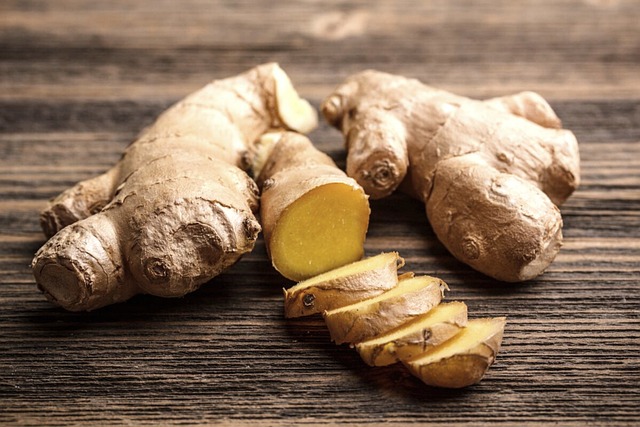
Ginger (Zingiber officinale) is a rhizome that has been used medicinally for over 3,000 years across Asian, Indian, and Arabic traditions. While widely known for digestive support, ginger’s most compelling clinical application in the context of vestibular health is its anti-vertigo and anti-nausea activity. Research shows ginger acts on the same receptor pathways as conventional anti-motion sickness drugs, but with a notably different side effect profile — specifically, without the sedation caused by antihistamines like dimenhydrinate.
What Makes Ginger Unique for Vestibular Health?
Ginger’s active compounds — gingerols (particularly 6-gingerol and 8-gingerol) and shogaols — work through a dual mechanism relevant to vertigo. First, they antagonize muscarinic M3 and histamine H1 receptors in the vestibular nuclei and vomiting center of the brainstem, directly reducing the neural signals that produce dizziness and nausea. Second, they promote gastric motility (prokinetic effect), which helps resolve the nausea component of vestibular episodes. This combination of central and peripheral action is what distinguishes ginger from purely central-acting drugs.
Additionally, ginger possesses anti-inflammatory properties (COX-2 and 5-LOX inhibition) that may benefit vestibular inflammation in conditions like labyrinthitis, and antioxidant effects that support inner ear cellular health.
Clinical Evidence
1. Vertigo & Vestibular Function
Lien et al. (2003, PMID: 12576305) conducted a double-blind, placebo-controlled crossover study examining ginger’s effect on caloric-induced vertigo and nystagmus. Ginger root extract (1000mg) significantly reduced the duration and intensity of nystagmus (involuntary eye movements) during caloric vestibular stimulation compared to placebo. The magnitude of reduction was comparable to that seen with conventional antihistamine anti-vertigo agents.
📊 Evidence Level: MODERATE — Controlled study with objective measurements, but sample size was small. Mechanism well-supported by pharmacological data.
2. Motion Sickness & Kinetosis
The most robust evidence for ginger comes from motion sickness research. Grontved et al. (1988, PMID: 3277342) demonstrated that 1000mg ginger root was superior to placebo and comparable to dimenhydrinate 100mg in preventing seasickness in naval cadets. A meta-analysis by Ernst and Pittler (2000, PMID: 10793599) of 6 RCTs concluded ginger was “a promising anti-emetic herbal remedy” with evidence “in favor of ginger over placebo.” Importantly, ginger caused significantly less drowsiness than dimenhydrinate.
📊 Evidence Level: STRONG — Multiple RCTs, meta-analysis, head-to-head comparison with pharmaceutical standard.
3. Anti-Inflammatory & Neuroprotective
Mashhadi et al. (2013, PMID: 23717759) reviewed ginger’s anti-inflammatory mechanisms, documenting COX-2 and 5-LOX enzyme inhibition with potency comparable to ibuprofen in vitro. For vestibular health, this anti-inflammatory activity may benefit conditions where inner ear inflammation contributes to vertigo (labyrinthitis, vestibular neuritis). Ginger also demonstrates neuroprotective properties through NF-kB pathway modulation.
📊 Evidence Level: MODERATE — Well-established anti-inflammatory profile; direct vestibular inflammation studies in humans are limited.
Dosage Guide
| Purpose | Studied Dose | Timing |
|---|---|---|
| Vertigo / vestibular support | 250-1000mg extract/day | With meals, divided doses |
| Motion sickness prevention | 1000mg single dose | 30 min before travel |
| Anti-nausea (general) | 250mg × 4/day (1000mg total) | Throughout the day |
| Anti-inflammatory | 500-2000mg extract/day | With meals |
Key note: Look for extracts standardized to 5% gingerols or specifying 6-gingerol content. Fresh ginger (~1 inch / 2.5cm piece) contains approximately 250-500mg equivalent of active compounds. Dried ginger powder is more concentrated than fresh.
What to Look for in a Ginger Supplement
Choose ginger root extract standardized to gingerol content (5% minimum). Capsules provide more consistent dosing than teas or raw ginger. Avoid products listing only “ginger powder” without standardization, as potency varies significantly between batches and sources. Supercritical CO2 extracts preserve the full spectrum of bioactive compounds. For motion sickness, capsule form is most practical since it can be taken pre-emptively.
Evidence Summary
| Outcome | Evidence Level | Key Reference |
|---|---|---|
| ✅ Motion sickness prevention | STRONG | Grontved 1988, Ernst 2000 meta-analysis |
| ✅ Vestibular vertigo / nystagmus | MODERATE | Lien 2003 |
| ✅ Anti-inflammatory (COX-2/5-LOX) | MODERATE | Mashhadi 2013 |
| ✅ Anti-nausea (general) | STRONG | Multiple Cochrane-level reviews |
BioBoost Verdict
🔬 BioBoost Evidence Score: 7.0/10 ✅
Ginger is a well-supported natural option for motion-related dizziness and mild vestibular vertigo, with strong evidence for motion sickness prevention comparable to pharmaceutical antihistamines — but without the sedation. Its dual mechanism (central vestibular receptor antagonism + peripheral prokinetic effect) is pharmacologically sound. For severe vertigo conditions like Ménière’s disease or BPPV, ginger is best used as a complementary approach alongside medical treatment, not a replacement. The main limitation is the relatively small number of vertigo-specific (vs. motion sickness) clinical trials.
🛒 Products in Our 2026 Ranking Containing Ginger Root
For our complete vertigo supplement ranking including products featuring anti-nausea and vestibular support ingredients, see Best Vertigo Supplements 2026.
Frequently Asked Questions
Does ginger help with vertigo and dizziness?
Yes. A controlled study by Lien et al. (2003) showed ginger reduced nystagmus and caloric vertigo responses. Its mechanism involves antagonism of muscarinic and histamine H1 receptors in the vestibular system, similar to conventional anti-vertigo drugs like meclizine, but without sedation.
How much ginger should I take for vertigo?
Clinical studies use 250mg-1000mg of ginger root extract per dose, 1-3 times daily. For motion sickness prevention, 1000mg taken 30 minutes before travel is the most studied protocol. Choose extracts standardized to 5% gingerols.
Is ginger better than prescription anti-vertigo medication?
Ginger is not a replacement for prescription medication in severe vertigo cases. However, studies suggest it can be as effective as dimenhydrinate (Dramamine) for motion sickness with fewer sedative side effects.
What are the side effects of ginger supplements?
Ginger is generally well-tolerated. Possible side effects include mild heartburn and stomach upset at high doses. Ginger has mild blood-thinning properties, so individuals on anticoagulants should consult their doctor.
What form of ginger is best for vertigo?
Standardized ginger root extract capsules with specified gingerol content offer the most reliable dosing. Fresh ginger and tea provide benefits but with variable potency. Capsules are most practical for motion sickness prevention.
Affiliate Disclosure: BioBoost Reviews participates in affiliate programs. We may earn a commission when you purchase through our links at no additional cost to you.
Important Disclaimer
⚠️ Medical Disclaimer: The information on BioBoost Reviews is for informational purposes only and should not be considered medical advice. If you experience persistent vertigo, consult a healthcare provider to rule out underlying conditions such as BPPV, Ménière’s disease, or vestibular neuritis. Individual results may vary.