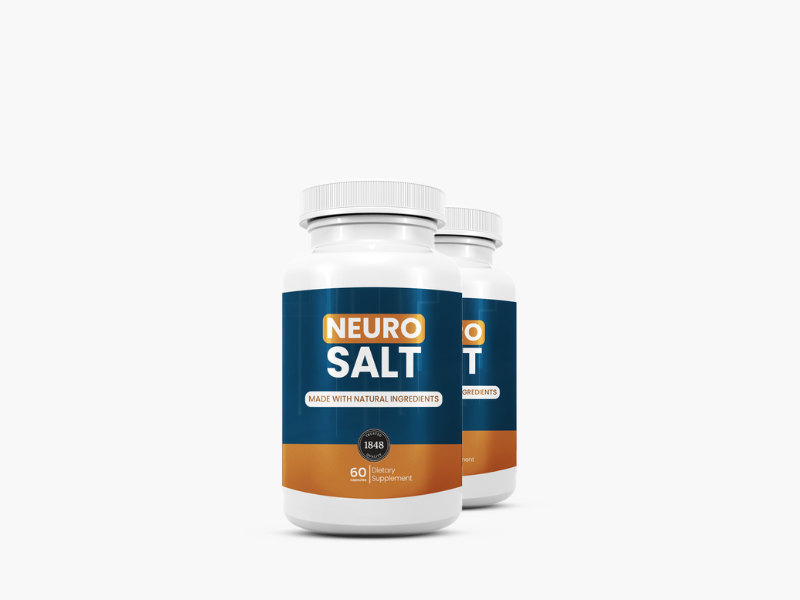
🔍 Quick Answer: NeuroSalt is a five-botanical capsule formula (60 capsules, 30 servings) delivering 450 mg of fully disclosed actives per 2-capsule serving. What sets it apart from most nerve-comfort supplements is that it publishes every single dose on the label with no proprietary blend, led by Corydalis yanhusuo at 100 mg and passionflower at 145 mg. We rate it 4.0/5 with an Evidence Gap Score of 5.6/10. It is best for adults who want a non-habit-forming botanical option for occasional tingling, restlessness and discomfort in the hands and feet, and who value a transparent label over a long ingredient list.
📋 Quick Verdict: Rating ⭐ 4.0/5 | Best for: adults seeking gentle botanical support for nerve comfort and evening relaxation | Strongest combo: Corydalis yanhusuo 100 mg + passionflower 145 mg | Format: capsules, 2 daily | Guarantee: 60-day money-back
▶ Watch How NeuroSalt Works (Official Video)
NeuroSalt Review 2026: Our Evidence-Based Analysis
Nerve-comfort supplements are one of the hardest categories to evaluate honestly. Most products in this space hide behind proprietary blends, so you never learn whether you are getting a meaningful dose or a dusting. NeuroSalt does the opposite: the Supplement Facts panel lists five botanicals with an exact milligram figure next to each one, totalling 450 mg of active ingredients per serving.
That transparency is genuinely useful, because it lets us do what we do on every review: compare the dose on the label against the dose used in published research, and tell you where the gap sits. This analysis is based entirely on the physical label and the manufacturer’s official pages. We do not repeat advertising claims from the promotional video, and we do not attribute results to any physician or media personality.
What Is NeuroSalt?
NeuroSalt is a dietary supplement sold in capsule form, distributed by Instituto Experiece (Lakeland, FL) and marketed under the NeuroSalt Research brand. Each bottle contains 60 capsules. The serving size is two capsules, which gives 30 servings, so a single bottle covers 30 days of use.
The label states the product is made in the USA with globally sourced ingredients, and the official pages display GMP, FDA-registered facility, non-GMO and natural-ingredient badges. The full ingredient list beyond the actives is short and unremarkable: microcrystalline cellulose as a flow agent, hydroxypropyl methylcellulose for the capsule shell (which makes it suitable for vegetarians), and magnesium stearate.
One clarification worth making up front, because it is the single most common question about this product: there is no salt in NeuroSalt. The Supplement Facts panel lists five botanicals and nothing else. No sodium, no potassium, no mineral salt of any kind appears in the formula. If you are watching your sodium intake, that is a point in the product’s favour.
How Does NeuroSalt Work?
Reading the formula as a whole, this is not a nerve-repair nutrient stack. It is a botanical calming and comfort blend. Four mechanistic pathways are plausible based on what each ingredient is known for in the published literature.
Pathway 1 – Alkaloid-mediated pain signalling. Corydalis yanhusuo is the most researched analgesic botanical in this formula. Its alkaloid fraction, particularly dehydrocorybulbine, has been studied in animal models of inflammatory and neuropathic pain, where it appears to act on dopamine receptor pathways rather than opioid receptors. This is the ingredient carrying most of the formula’s rationale.
Pathway 2 – GABAergic relaxation. Passionflower is the best-documented ingredient in the blend for human use. Its flavonoid content is generally described as modulating GABA-A signalling, which is the basis for its long record in anxiety and sleep-quality research. In a nerve-comfort context this matters because restlessness and poor sleep amplify the perception of tingling and burning sensations.
Pathway 3 – Additional botanical sedation. California poppy contains isoquinoline alkaloids and has a long traditional record as a mild sedative and analgesic, most often studied in combination products rather than alone. Stacked with passionflower, it reinforces the same relaxation axis rather than adding a new one.
Pathway 4 – Antioxidant and mucilaginous support. Prickly pear (Opuntia) is rich in betalains and polyphenols and has been studied mainly for antioxidant and metabolic endpoints. Marshmallow root works through mucilage, a soothing polysaccharide with a solid evidence base for throat and gastrointestinal comfort. Neither has direct human evidence for nerve endpoints, so we treat these as supporting cast rather than active drivers.
NeuroSalt Ingredient Analysis
Every figure below is taken directly from the physical label. Serving size is two capsules; the panel lists no proprietary blend, which is why we can assess each ingredient individually.
Corydalis (Corydalis yanhusuo) Powder – 100 mg
The strongest ingredient choice in the formula. Corydalis has centuries of use as a pain herb in traditional Chinese medicine and, unusually for a botanical, it has attracted genuine modern pharmacological interest for non-opioid pain pathways. The honest caveat is dosing: traditional preparations use gram-level quantities of raw herb, and this is 100 mg of powder rather than a concentrated standardised extract. The mechanism is well argued; the quantity is conservative.
📊 Evidence Gap Score: 7/10 ✅
Passionflower (Passiflora incarnata) – 145 mg
The largest single dose in the formula and the ingredient with the most human data behind it. Passionflower has been examined in controlled trials for anxiety and sleep quality, which is directly relevant to anyone whose tingling or burning sensations are worse at night. Most published trials, however, use standardised extracts at doses well above 145 mg. At this level we would expect a gentle calming contribution rather than the effect size reported in the trial literature.
📊 Evidence Gap Score: 6/10 ✅
Prickly Pear (Opuntia phaeacantha) 20:1 Extract – 50 mg
The only concentrated extract in the blend, and the ratio matters. At 20:1, this 50 mg corresponds to roughly 1,000 mg of raw plant equivalent, which is a far more respectable figure than the raw milligram number suggests. Prickly pear research centres on antioxidant capacity, inflammatory markers and glucose handling. The link to nerve comfort is indirect and mostly preclinical, so we score it on mechanism plausibility rather than direct outcome data.
📊 Evidence Gap Score: 6/10 ✅
California Poppy (Eschscholzia californica) Seed – 45 mg
A traditional mild sedative with a reasonable safety record, most commonly studied as part of combination formulas alongside valerian or hawthorn rather than in isolation. Two things temper the score: the human evidence base is thinner than passionflower’s, and 45 mg sits at the low end of what is typically used. It functions here as a reinforcement to the relaxation pathway rather than as an independent driver.
📊 Evidence Gap Score: 5/10 ⚠️
Marshmallow (Althaea officinalis) Root – 110 mg
Marshmallow root has a genuinely good evidence base, but it is for the wrong endpoint. Its mucilage content is well documented for soothing irritated throat and gastrointestinal tissue, and it is a respected demulcent. What we could not find is meaningful human evidence connecting it to nerve comfort. Traditional demulcent use also involves gram-level quantities, so 110 mg is modest even for its established application. This is the ingredient where the gap between label and literature is widest.
📊 Evidence Gap Score: 4/10 ⚠️
Evidence Gap Analysis™ Summary
| Ingredient | Dose per serving | Evidence Gap Score | Assessment |
|---|---|---|---|
| Corydalis yanhusuo powder | 100 mg | 7/10 ✅ | Best mechanistic case in the formula; dose conservative vs traditional use |
| Passionflower | 145 mg | 6/10 ✅ | Strongest human data; below typical trial doses |
| Prickly pear 20:1 extract | 50 mg | 6/10 ✅ | ~1,000 mg raw equivalent; indirect relevance to nerve endpoints |
| California poppy seed | 45 mg | 5/10 ⚠️ | Traditional sedative; thin standalone evidence, low dose |
| Marshmallow root | 110 mg | 4/10 ⚠️ | Solid demulcent evidence, but not for nerve endpoints |
| Formula average | 450 mg total | 5.6/10 | Transparent, conservative, comfort-oriented |
What the table tells you: NeuroSalt is honestly labelled and gently dosed. Two ingredients carry the formula, two support it, and one is arguably along for the ride. If you are shopping for a high-dose nerve nutrient stack built on alpha-lipoic acid, benfotiamine or B12, this is not that product – none of those appear on the label. If you want a botanical comfort and relaxation formula with nothing hidden, it does exactly what it says.
Pros & Cons
Pros
- ✅ No proprietary blend. Every one of the five doses is printed on the label – rare in this category and the single best thing about this product.
- ✅ Corydalis yanhusuo at a visible dose. The most interesting pain-related botanical in the blend is not buried in a blend total.
- ✅ Genuinely concentrated prickly pear. The 20:1 ratio means the 50 mg is worth roughly 1,000 mg of raw plant.
- ✅ Clean excipient list. Three inactive ingredients, vegetarian HPMC capsule, no artificial colours or fillers listed.
- ✅ Non-habit-forming botanicals. No controlled substances, no melatonin, no stimulants.
- ✅ 60-day money-back guarantee plus free US shipping on the 3- and 6-bottle packages.
- ✅ Sodium-free. Despite the name, nothing in the formula adds to daily sodium intake.
Cons
- ⚠️ Conservative dosing overall. At 450 mg total actives, most ingredients sit below the doses used in published research.
- ⚠️ Marshmallow root is the weak link. Well-evidenced ingredient, but not for nerve comfort.
- ⚠️ No classic nerve nutrients. No alpha-lipoic acid, benfotiamine, B12 or acetyl-L-carnitine on the label.
- ⚠️ Corydalis is powder, not standardised extract. Alkaloid content is therefore not guaranteed batch to batch.
- ⚠️ Sedating profile. The blend stacks calming botanicals, which is a consideration if you drive or operate machinery after dosing.
- ⚠️ Sold direct only. Not available through general retail, and the 2-bottle package carries a shipping charge.
→ Check current NeuroSalt pricing and package options
Is NeuroSalt Safe?
All five actives are established botanicals with long records of human use, and the excipient list is minimal. That said, this formula deserves more caution than a simple vitamin, because every ingredient in it leans calming and two of them are alkaloid-containing plants.
- ⚠️ Additive sedation. Passionflower, California poppy and corydalis all have relaxant profiles. Combining them with alcohol, prescription sleep aids, benzodiazepines, opioid painkillers or sedating antihistamines can compound drowsiness.
- ⚠️ Driving and machinery. Assess how the formula affects you before taking it and then driving.
- ⚠️ Marshmallow root and drug absorption. Mucilage can slow the absorption of other oral medications taken at the same time. Separating doses by roughly two hours is a sensible precaution.
- ⚠️ Blood glucose. Prickly pear has been studied for glucose handling, so anyone on diabetes medication should discuss it with their prescriber.
- ⚠️ Label cautions, stated verbatim by the manufacturer: do not exceed the recommended dose; not for pregnant or nursing mothers; not for children under 18; individuals with a known medical condition should consult a physician before use.
- ✅ Manufacturing: made in the USA with globally sourced ingredients, with GMP and FDA-registered facility badges displayed on the official pages.
- ✅ No stimulants, no melatonin, no controlled substances in the formula.
Who Is NeuroSalt Best For?
✅ Good fit if you:
- Experience occasional tingling, buzzing or restlessness in the feet and hands, particularly in the evening
- Want a botanical option that is not a prescription drug and not habit-forming
- Value a fully disclosed label over a long list of hidden ingredients
- Have found that poor sleep makes your symptoms feel worse
- Are monitoring sodium intake and want a mineral-free option
- Want a long trial window before committing – the 60-day guarantee covers two full bottles
⚠️ Not the right fit if you:
- Are pregnant, nursing, or under 18 – the label excludes you explicitly
- Take sedatives, benzodiazepines, opioid analgesics or sleep medication without clearing it with your doctor first
- Have diagnosed neuropathy and are looking for something to replace medical treatment – this is a supplement, not a therapy
- Specifically want the classic nutrient approach built on alpha-lipoic acid, benfotiamine or B12 – none are in this formula
- Need maximum-strength dosing rather than a gentle, conservative blend
NeuroSalt Pricing
NeuroSalt is sold directly through the manufacturer’s checkout. One bottle equals 30 days of use, so package length maps cleanly onto supply. Prices below are taken from the official order pages at the time of writing.
| Package | Total | Per Bottle | Per Day | Savings |
|---|---|---|---|---|
| 2 bottles (60-day supply) | $158 + $9.99 shipping | $79 | ~$2.63 | Down from $358 |
| 3 bottles (90-day supply) | $207, free US shipping | $69 | ~$2.30 | Save $330 |
| 6 bottles (180-day supply) | $294, free US shipping | $49 | ~$1.63 | Save $780 – best value |
Which package makes sense? Botanical formulas of this kind are not overnight products, and the manufacturer itself asks for at least 30 days of use before considering a refund. That makes the 2-bottle package the realistic minimum for a fair trial. The 6-bottle tier cuts the per-day cost to under a third of the entry package and ships free, which is where the value sits – and since the 60-day guarantee applies to the purchase regardless of package size, the larger order is not a larger risk.
Frequently Asked Questions
What is in NeuroSalt and at what doses?
NeuroSalt discloses every dose on its label with no proprietary blend. Each 2-capsule serving provides passionflower (Passiflora incarnata) 145 mg, marshmallow (Althaea officinalis) root 110 mg, corydalis (Corydalis yanhusuo) powder 100 mg, prickly pear (Opuntia phaeacantha) 20:1 extract 50 mg and California poppy (Eschscholzia californica) seed 45 mg, for a total of 450 mg of active botanicals. Other ingredients are microcrystalline cellulose, an HPMC capsule shell and magnesium stearate.
Does NeuroSalt actually contain pink salt?
No. The Supplement Facts panel lists only five botanical ingredients and no sodium or mineral salt of any kind. The “salt” in the product name refers to the brand, not to the formula. For anyone monitoring sodium intake that is an advantage rather than a drawback, but buyers expecting a mineral-based product should know it is a botanical capsule formula.
How do you take NeuroSalt and how long does a bottle last?
The label directs two capsules daily with an 8 oz glass of water. Each bottle holds 60 capsules, which equals 30 servings, so one bottle covers 30 days. Because every botanical in the formula has a calming or relaxant profile, many users find evening dosing more comfortable than morning dosing.
Is NeuroSalt safe, and who should avoid it?
The formula is made in a US facility with GMP and non-GMO claims, and all five ingredients are established botanicals. However, the label states it is not for pregnant or nursing mothers, not for children under 18, and that anyone with a known medical condition should consult a physician first. Because the blend is sedating, it may add to the effect of alcohol, sleep aids, benzodiazepines, opioids or antihistamines. Marshmallow root mucilage can slow absorption of other oral medications, so separating doses by about two hours is sensible.
Is there a money-back guarantee on NeuroSalt?
Yes. The official pages state a 60-day money-back guarantee from the date of purchase, with the manufacturer asking for at least 30 days of use before a refund request. The 3-bottle and 6-bottle packages ship free within the US; the 2-bottle package adds a $9.99 shipping charge.
Our Verdict on NeuroSalt
NeuroSalt earns its 4.0/5 primarily on honesty. In a category where proprietary blends are the norm and buyers are routinely kept in the dark about what they are actually swallowing, a five-ingredient panel with a milligram figure beside every line is worth more than it might sound. It means the analysis above was possible at all – and it means you can judge the product on its merits instead of on marketing copy.
What holds the score at 4.0 rather than higher is dosing. Corydalis yanhusuo is a genuinely interesting choice with real pharmacological interest behind it, and passionflower has the human trial record to justify its place – but both sit below the levels used in the research we would point to. Marshmallow root is the ingredient we would swap first. Set expectations accordingly: this is a gentle comfort and relaxation formula, not a high-potency intervention.
🔬 BioBoost Verdict: A transparently labelled botanical blend that does not overpromise on the panel, even if the advertising around it does. If evening restlessness and occasional tingling in the hands and feet are what you are dealing with, and you want something non-habit-forming with a 60-day window to judge it for yourself, NeuroSalt is a reasonable and low-risk place to start. If you need a high-dose nerve nutrient stack, look elsewhere – and if symptoms are persistent, worsening or interfering with walking, see a clinician rather than a supplement.
You may also want to compare our analyses of NervoVive and NervEase, which take different formulation approaches to the same category.
→ Check NeuroSalt availability and the 60-day guarantee on the official page
Affiliate Disclosure: BioBoost Reviews may earn a commission if you purchase through links on this page, at no additional cost to you. This does not influence our ratings, our dose analysis, or the evidence gaps we report. All ingredient figures on this page were taken from the physical product label.
Important Disclaimer
⚠️ Medical Disclaimer: Persistent tingling, numbness, burning or weakness in the hands and feet can be a symptom of an underlying medical condition, including diabetes, vitamin deficiency, thyroid disorder, nerve compression or circulatory disease. NeuroSalt is a dietary supplement, not a medical treatment, and it is not a substitute for diagnosis or for prescribed therapy. Do not delay medical evaluation in order to try a supplement. If you have diabetes, are taking prescription medication, are pregnant or nursing, or your symptoms are worsening or affecting your balance or ability to walk, consult a licensed healthcare professional before using this or any dietary supplement. These statements have not been evaluated by the Food and Drug Administration. This product is not intended to diagnose, treat, cure or prevent any disease.