Frequently Asked Questions
Are there any side effects or risks associated with red clover supplements?
Red clover is generally well-tolerated by most people, but some may experience mild side effects such as headaches, nausea, or skin rash. Due to its estrogenic activity, it may not be suitable for individuals with hormone-sensitive conditions like breast cancer, endometriosis, or uterine fibroids. Red clover may also interact with blood-thinning medications, so consultation with a healthcare provider is recommended before use.
How long does it take to see results from red clover isoflavones?
Most people begin to notice benefits from red clover isoflavones within 4-12 weeks of consistent use. For menopausal symptoms, some improvement may be seen as early as 4-6 weeks, while cardiovascular and bone health benefits typically require longer-term use of 3-6 months or more. Individual responses can vary significantly based on factors like dosage, overall health, and individual hormone levels.
Is red clover safe for long-term use?
Current research suggests that red clover isoflavones are generally safe for long-term use in healthy individuals when taken at recommended dosages. However, due to limited long-term safety data, most experts recommend periodic breaks or cycles rather than continuous use for years. Regular monitoring by a healthcare provider is advisable, especially for individuals with pre-existing health conditions or those taking other medications.
What are the main health benefits of red clover isoflavones?
Red clover isoflavones are primarily known for their potential to help manage menopausal symptoms like hot flashes and night sweats due to their phytoestrogen properties. Research also suggests they may support cardiovascular health by helping to maintain healthy cholesterol levels and blood vessel function. Additionally, some studies indicate potential benefits for bone health and skin elasticity, though more research is needed to confirm these effects.
What is the recommended dosage for red clover isoflavones?
The typical dosage for red clover isoflavone supplements ranges from 40-80 mg per day, standardized to contain at least 8% isoflavones. Most clinical studies have used doses between 40-160 mg daily, divided into two doses with meals. It’s important to start with a lower dose and consult with a healthcare provider before beginning supplementation, especially if you have hormone-sensitive conditions.
Evidence Summary: Red Clover isoflavones have MODERATE evidence for reducing hot flash frequency in menopausal women. Contains genistein, daidzein, formononetin, and biochanin A — phytoestrogenic isoflavones that weakly bind estrogen receptors. Multiple meta-analyses support modest but consistent benefits.
What Is Red Clover?
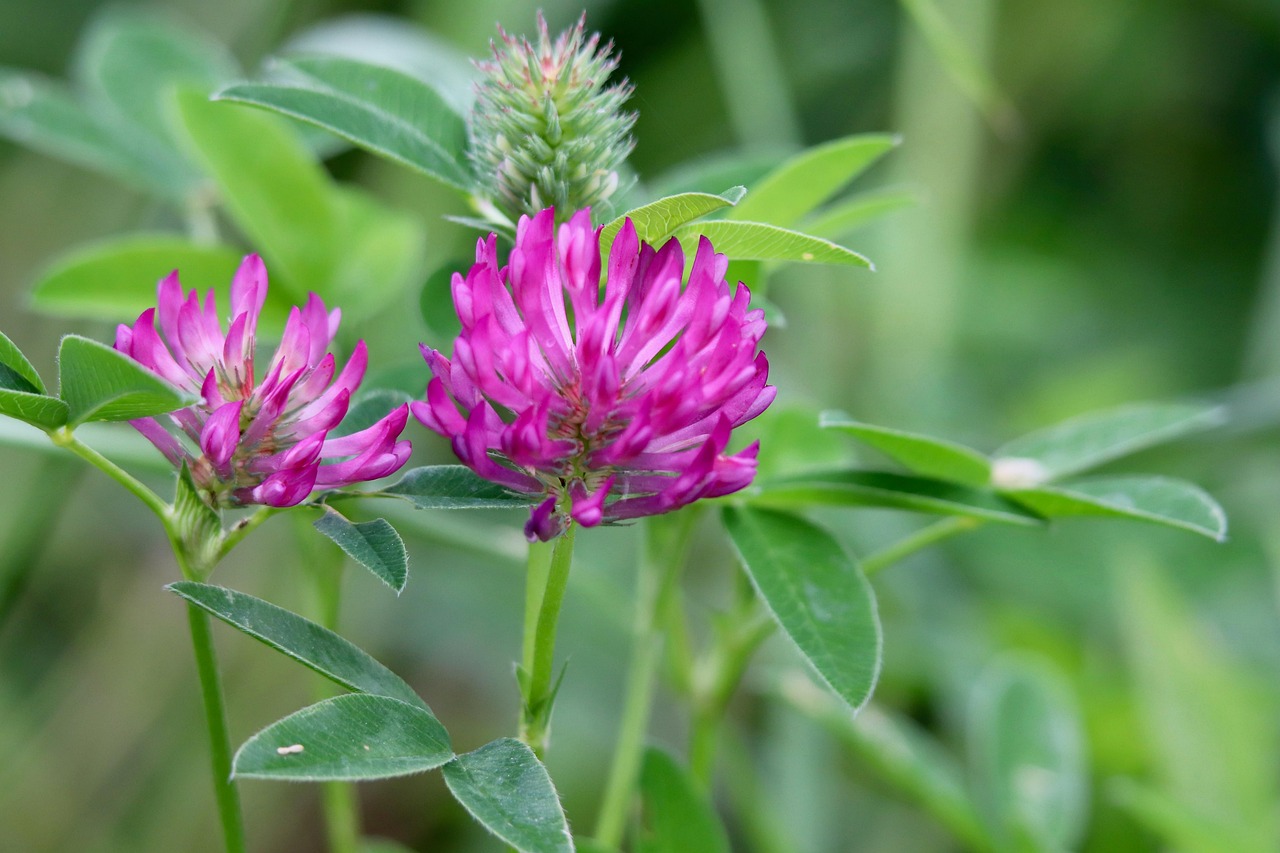
Red Clover (Trifolium pratense) is a legume plant native to Europe and Asia that contains concentrated isoflavones — plant-derived compounds that structurally resemble estrogen. Unlike soy isoflavones (primarily genistein and daidzein), Red Clover provides all four major isoflavones: genistein, daidzein, formononetin, and biochanin A. The standardized extract Promensil® (40mg isoflavones/day) was used in most clinical trials. Red Clover isoflavones are considered phytoestrogens — they bind to estrogen receptors with much lower affinity than endogenous estrogen, producing weak estrogenic effects that may help offset declining estrogen levels during menopause.
Key Benefits & Clinical Evidence
1. Hot Flash Reduction
🟡 Moderate Evidence. A 2007 meta-analysis in Maturitas (5 RCTs, n=396) found Red Clover isoflavones reduced hot flash frequency by approximately 44% compared to baseline, with a modest advantage over placebo. A 2016 Cochrane review of phytoestrogens broadly confirmed moderate efficacy for vasomotor symptoms, with Red Clover among the better-supported options.
2. Bone Density Support
🟡 Moderate Evidence. A 2004 RCT (n=177, 2 years) found Red Clover extract (Promensil®) slowed bone mineral density loss at the lumbar spine compared to placebo. Effect sizes are smaller than HRT but potentially meaningful for long-term bone health in early post-menopause.
3. Cardiovascular Support
🟡 Moderate Evidence. Several trials report improvements in arterial compliance and lipid profiles (reduced LDL, increased HDL) with Red Clover isoflavone supplementation. A 2005 meta-analysis found significant improvements in arterial stiffness in postmenopausal women.
Clinical Dosage Reference
| Purpose | Clinical Dose | Duration | Evidence |
|---|---|---|---|
| Hot flash reduction | 40–80mg/day isoflavones | 12–24 weeks | 🟡 Moderate |
| Bone density support | 40mg/day (Promensil®) | 12–24 months | 🟡 Moderate |
| Cardiovascular | 40–60mg/day | 3–6 months | 🟡 Moderate |
Safety Considerations
Red Clover isoflavones are generally well-tolerated. Women with hormone-sensitive cancers (breast, uterine, ovarian) or on tamoxifen should avoid phytoestrogens without medical supervision. May interact with warfarin (blood thinners). Not recommended during pregnancy or breastfeeding.
Last Updated: April 2026 | Sources: PubMed, Maturitas, Cochrane Library
DISCLAIMER: For educational purposes only. Not medical advice.
Affiliate Disclosure: BioBoost Reviews may receive a commission for purchases made through the links in this review. This does not affect our editorial independence or the price you pay. We only review products we believe can provide value to our readers.
Important Disclaimer
⚠️ Medical Disclaimer: The information provided in this review is for educational purposes only and is not intended to diagnose, treat, cure, or prevent any disease. These statements have not been evaluated by the Food and Drug Administration. This is a dietary supplement and should not replace professional medical advice. Consult your healthcare provider before starting any new supplement.