Quick Answer: What Does the Science Say About Psyllium Husk?
Psyllium husk is one of the best-evidenced dietary fibers for gut health, with FDA approval as an OTC laxative and cholesterol-lowering agent. It has the strongest clinical trial database of any fiber supplement for IBS symptom management. Unlike many gut health ingredients, psyllium’s mechanisms are well-characterized and its clinical benefits replicated across multiple large randomized controlled trials.
What Is Psyllium Husk?
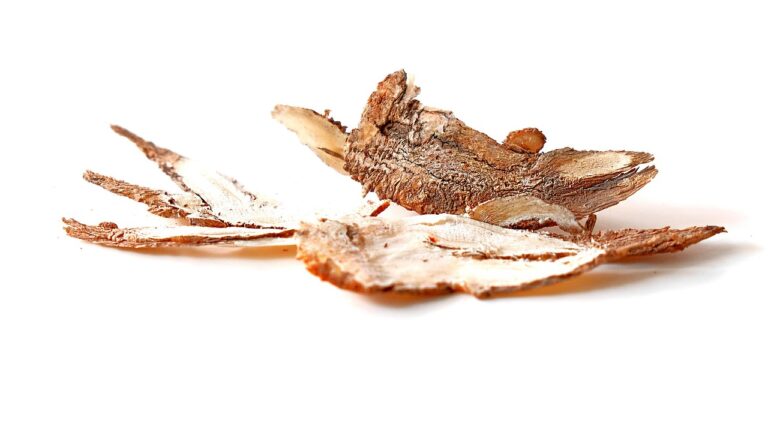
Psyllium husk is the outer seed coating of Plantago ovata, a plant native to India. It is composed of approximately 70% soluble fiber (primarily arabinoxylans) and 30% insoluble fiber. When exposed to water, psyllium forms a viscous gel that dramatically slows intestinal transit, modulates stool water content, and acts as a prebiotic substrate for colonic bacteria. It is the active ingredient in Metamucil and is FDA-approved for both laxative use and as a cholesterol-lowering claim at ≥7g/day.
Mechanism of Action
Psyllium’s gel-forming soluble fiber works through three primary mechanisms. First, water regulation: the gel retains water in the colon, softening hard stools in constipation and firming loose stools in diarrhea — a bidirectional normalization effect that makes it uniquely useful in IBS regardless of subtype. Second, transit modulation: the increased bulk slows gastric emptying and reduces colonic transit time in constipation while the gel’s viscosity reduces urgency in diarrhea. Third, prebiotic fermentation: colonic bacteria partially ferment psyllium, producing short-chain fatty acids (SCFAs) — particularly butyrate — that feed colonocytes and support gut barrier integrity.
Clinical Evidence
The evidence base is substantial. A landmark 2012 meta-analysis by Bijkerk et al. (BMJ) covering 12 RCTs found psyllium significantly superior to placebo for global IBS symptom improvement (RR 1.55, 95% CI 1.35–1.78). A 2017 Cochrane review confirmed psyllium’s efficacy for chronic constipation. For cholesterol: a 1999 meta-analysis of 8 RCTs showed 3.9g/day psyllium reduced LDL by ~7% vs placebo. For glycemic control: multiple RCTs show 5–10g psyllium before meals reduces postprandial glucose by 11–19% in type 2 diabetics.
Evidence Gap: Most IBS trials are 12 weeks or shorter — long-term efficacy data is limited. Optimal dose for specific IBS subtypes remains under investigation. Psyllium is not effective for all IBS patients — approximately 30% show no response.
Dosage & Administration
IBS / Constipation: 5–10g per dose, 1–3 times daily with ≥240ml water. Start at 5g/day for 1–2 weeks, then increase. Cholesterol: ≥7g/day of psyllium soluble fiber (approximately 10g psyllium husk). Glycemic control: 5–10g before main meals. Always take with adequate water — psyllium without sufficient water can cause esophageal impaction. Take medications 1–2 hours before or after psyllium to prevent absorption interference.
Safety Profile
Generally very well-tolerated. Most common adverse effects: bloating and gas (especially first 1–2 weeks), alleviated by gradual dose escalation. Adequate hydration is mandatory — ≥240ml water per dose. Rare but serious: esophageal obstruction if taken with insufficient water. Drug interactions: may reduce absorption of lithium, carbamazepine, digoxin, and some antibiotics — space by 2 hours. Allergic reactions (contact or inhalation) are possible in psyllium-sensitive individuals.
BioBoost Verdict
Psyllium husk earns a Strong ✅ (9/10) as one of the most evidence-backed gut health fiber supplements available. FDA-approved, multiple large RCTs, bidirectional IBS benefit, and prebiotic properties make it the foundational fiber ingredient in gut health formulations. The honest caveat: ~30% of IBS patients are non-responders, and adequate hydration is non-negotiable.
🛒 Products Containing Psyllium Husk
- GutOptim Review — Comprehensive gut health formula with psyllium husk as primary prebiotic fiber
- DigestiStart Review — Digestive support blend with psyllium husk + probiotic strains
Frequently Asked Questions
What does psyllium husk do for gut health?
Forms a viscous gel that normalizes stool consistency (bidirectional: relieves both constipation and diarrhea), feeds beneficial gut bacteria as a prebiotic, and reduces IBS symptoms. FDA-approved as OTC laxative and cholesterol-lowering agent.
How much psyllium husk should I take daily?
5–10g per dose, 1–3 times daily with ≥240ml water. Start at 5g/day and increase gradually to minimize bloating. Always take with adequate water.
Can psyllium husk help with IBS?
Yes — one of the best-evidenced fibers for IBS. Bijkerk et al. 2012 meta-analysis (12 RCTs) found it significantly superior to placebo for global IBS symptom improvement.
Does psyllium husk have side effects?
Bloating and gas initially (dose-escalate slowly). Must be taken with ≥240ml water per dose to prevent esophageal obstruction. Space medications 1–2 hours from psyllium.
Which gut health supplements contain psyllium husk?
GutOptim and DigestiStart — both reviewed at BioBoostReviews.
Affiliate Disclosure: This page contains affiliate links. We may earn a commission at no extra cost to you. Analysis based on published clinical evidence only.
Important Disclaimer
⚠️ Medical Disclaimer: The information provided in this review is for educational purposes only and is not intended to diagnose, treat, cure, or prevent any disease. These statements have not been evaluated by the Food and Drug Administration. This is a dietary supplement and should not replace professional medical advice. Consult your healthcare provider before starting any new supplement.